How to Get Rid of Trash Can Smell (and Maggots) — The Florida Homeowner's Guide
How to Get Rid of Trash Can Smell (and Maggots) — The Florida Homeowner's Guide
If your garbage can smells so bad you hold your breath every time you open the lid, you're not alone — "how to get rid of trash can smell" is one of the most common searches among Florida homeowners every summer. Between the heat, the humidity, and the afternoon rain, Tampa Bay trash cans turn into bacteria incubators faster than almost anywhere in the country.
Here's why your trash can smells, how to fix it yourself, why maggots keep showing up, and when it's time to call in professional help.
Why Does My Trash Can Smell So Bad?
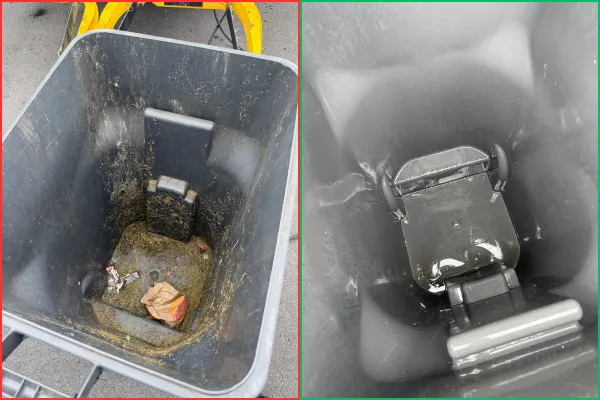
That smell isn't just "garbage" — it's active decomposition. Even when your bags are tied tight, they leak. Meat juices, dairy, pet waste, and food scraps drip into the bottom of the can, where Florida heat cooks them into a bacterial soup. Common residents include E. coli, salmonella, and listeria.
In Tampa Bay summers, the inside of a closed trash can in the sun can exceed 120°F — perfect conditions for bacteria to multiply and odors to bake into the plastic itself. That's why the smell comes back even after you toss in a fresh bag: the can itself is contaminated, not just the contents.
Why Are There Maggots in My Trash Can?
Maggots are fly larvae. A single fly can slip into your bin and lay up to 150 eggs at a time, and in summer heat those eggs hatch within 24 hours. If you've ever opened your can to a squirming surprise, it means flies found a food source inside — usually residue at the bottom or in the lid grooves.
Maggots aren't just gross. They signal that your can has enough organic residue to support a fly breeding cycle, which also attracts roaches, ants, and rodents.
How to Clean a Smelly Trash Can Yourself
If you want to DIY it, here's the method that actually works:
Empty the can completely the day after trash pickup
Rinse with a hose to knock out loose debris
Scrub with hot water and dish soap (or a 1:4 vinegar-water mix) using a long-handled brush — get the bottom corners and the underside of the lid
For maggots: pour boiling water over them first, then scrub
Rinse again, then let it dry completely in the sun — bacteria love moisture
Sprinkle baking soda in the bottom before the next bag goes in
A few warnings: wear gloves, don't mix bleach and vinegar (toxic fumes), and be careful where the rinse water goes — letting contaminated runoff flow into the storm drain violates stormwater rules in many Florida municipalities, because those drains empty into Tampa Bay untreated.
Why DIY Cleaning Doesn't Last
Here's the honest truth most cleaning guides skip: a garden hose and dish soap can't kill what's living in your can. Household water pressure won't blast residue out of the molded grooves, and without sustained high heat, much of the bacteria survives and repopulates within days. That's why the smell returns a week later no matter how hard you scrub.
It's also a genuinely miserable chore — kneeling over a 96-gallon can, breathing the fumes, splashing contaminated water on your driveway. Most people do it exactly once.
The Permanent Fix: Professional High-Heat Bin Cleaning
Professional bin cleaning solves the problem at the source. At Lightning Bin Wash, our truck-mounted system cleans your cans curbside with high-pressure, high-heat steam that kills 99% of bacteria — the stuff a hose can't touch — then applies an enzyme treatment that breaks down odor-causing residue and keeps it from coming back. All the contaminated water is captured in the truck and hauled away, so nothing ends up on your driveway or in the storm drain.
The whole thing happens the day after your trash pickup, while your cans are empty at the curb. You don't lift a finger; you just get a text when your bins are fresh and back at the top of your driveway.
We serve the Tampa Bay area including Tampa, Brandon, Riverview, FishHawk, Valrico, Bloomingdale, Apollo Beach, Ruskin, Gibsonton, Lithia, Sun City Center, and Seffner.
How to Keep Your Trash Can From Smelling Between Cleanings
Bag everything — double-bag meat scraps and pet waste
Let wet items drain before bagging
Keep the lid fully closed (flies need only a crack)
Store the can in shade if possible
Sprinkle baking soda in the bottom after each pickup
Schedule recurring professional cleaning — monthly is ideal for Florida summers
Frequently Asked Questions
What kills the smell in a trash can? Removing the source — the bacteria-laden residue — is the only real fix. Baking soda and deodorizers mask odor temporarily; high-heat steam cleaning eliminates it.
How do I get rid of maggots in my trash can fast? Pour boiling water directly on them, then clean the can thoroughly to remove the residue that attracted flies. To prevent them from returning, the can needs to be sanitized — not just rinsed.
How often should trash cans be cleaned in Florida? Monthly during the warm months (which in Tampa is most of the year). Quarterly can work for households that bag everything tightly.
How much does professional trash can cleaning cost? Lightning Bin Wash plans start at $29/month or $49/quarter for up to 2 bins, enzyme treatment included, no contracts.
Stop Holding Your Breath
If you're tired of the smell, the flies, and the dread of lid-lifting, let us handle it. Lightning Bin Wash deep cleans trash and recycling bins curbside across Tampa Bay — schedule online in two minutes or call/text (813) 993-5965.
Lightning Bin Wash provides curbside trash and recycling bin cleaning across the Tampa Bay area, including Tampa, Brandon, Riverview, FishHawk, Valrico, Apollo Beach, Ruskin, and Gibsonton, FL.